Our ethos
Cultivating a culture of learning through play is very important to us. We build children’s confidence and whet their appetite to learn with a range of fun, age-appropriate, daily activities which are based around the children’s interests and next steps.
Each of our nurseries works to the Early Years framework, offering a safe and stimulating environment from which every child leaves enjoying learning, ready for school, and able to make and be a good friend to others.
At Little Learners, we implement a curriculum to children using loosely-based monthly topics across all age groups. The staff differentiate activities accordingly to meet the age and needs of the children and track the activities through in-the-moment planning to explore and build upon the children’s interests and developmental next steps.
In order to enable a smooth transition between each age group up until the children are ready to leave us for school, they are targeted to meet two developmental outcomes at each stage.
Our pedagogy
At the heart of our pedagogy is the belief that children thrive in environments where they feel safe, valued, and deeply connected to their surroundings, their community, and their own sense of wonder.
We create a home-from-home setting that fosters warmth, trust, and a sense of belonging, where every child is seen, heard, and celebrated.
A home-from-home environment
We view our setting as an extension of the child’s home—a comforting, nurturing space where relationships are central and emotional wellbeing is prioritised.
Children are encouraged to be themselves, express their thoughts freely, and build secure attachments with both educators and peers. Familiar routines, cozy corners, and respectful care practices help children feel at ease and confident to explore.
Community exploration
We see the community as a powerful and living classroom. Through regular trips and local walks, children are immersed in real-life experiences that broaden their horizons and spark meaningful connections.
Whether visiting the library, the post office, the local park, or talking to community helpers, children develop an understanding of the world around them and their place within it. These hands-on encounters foster respect, empathy, and a growing curiosity about the people and places that shape our shared lives.
Following children's interests
We believe children learn best when they are engaged, curious, and passionate. That’s why our curriculum is flexible, responsive, and built around the children’s own interests and inquiries.
Our practitioners observe closely, listen deeply, and scaffold learning experiences that stretch thinking and nurture creativity—whether a child is fascinated by insects, trains, baking, or building.
By placing children at the centre of their learning journey, we empower them to lead with confidence, explore with purpose, and learn in ways that are meaningful to them.
An 'in the moment' approach
We believe that learning happens most powerfully in the moment—when a child is deeply engaged, exploring something new, or expressing themselves freely.
Our pratitoners are skilled in recognising these moments of high involvement and using them as opportunities for meaningful interaction. Rather than interrupting play, we join it—offering language, challenge, or reflection right then and there. This spontaneous, responsive way of working nurtures deeper understanding, emotional connection, and a true love of learning.
In essence, our pedagogy weaves together the warmth of home, the richness of community, and the spark of individual curiosity. We aim to nurture confident, kind, and capable learners who feel grounded in who they are and inspired by the world around them.
Developmental outcomes
Babies (3-16 months)
- Taking their first steps unaided with little support
- Beginning to communicate using single words
- Beginning to feed themselves at meals, with use of a spoon or fork through hand eye coordination
- Responding to their own name and to simple instructions
Toddlers (16-24 months)
- Beginning to drink from a open cup without much spillage
- Using simple sentences within their communication
- Beginning to communicate wet or soiled nappy/pants and show increasing awareness of bladder and bowel urges
- Beginning to separate from main caregiver when familiar adults are nearby
2-3 years
- Expressing a range of emotions and begin to understand the feelings of others
- Beginning to have back-and-forth conversations, even if not always clearly articulated
- Partially or fully toilet trained
- Exploring both indoor and outdoor spaces safely by walking, running, jumping, and climbing
Preschoolers (3-5 years)
- Expressing needs, opinions, and preferences clearly and respectfully
- Showing increasing independence in self-care (e.g. toileting, dressing, eating)
- Listening attentively during stories, group times, and conversations
- Using full sentences and a widening vocabulary to express thoughts, recall events, and explain ideas
- Using fine motor skills with increasing control (e.g. holding pencils, using scissors, threading, mark-making)
- Giving meaning to marks they make and starting to form some recognisable letters.
- Recognising and naming some numerals and beginning to match numerals to quantities
Meet our pets!

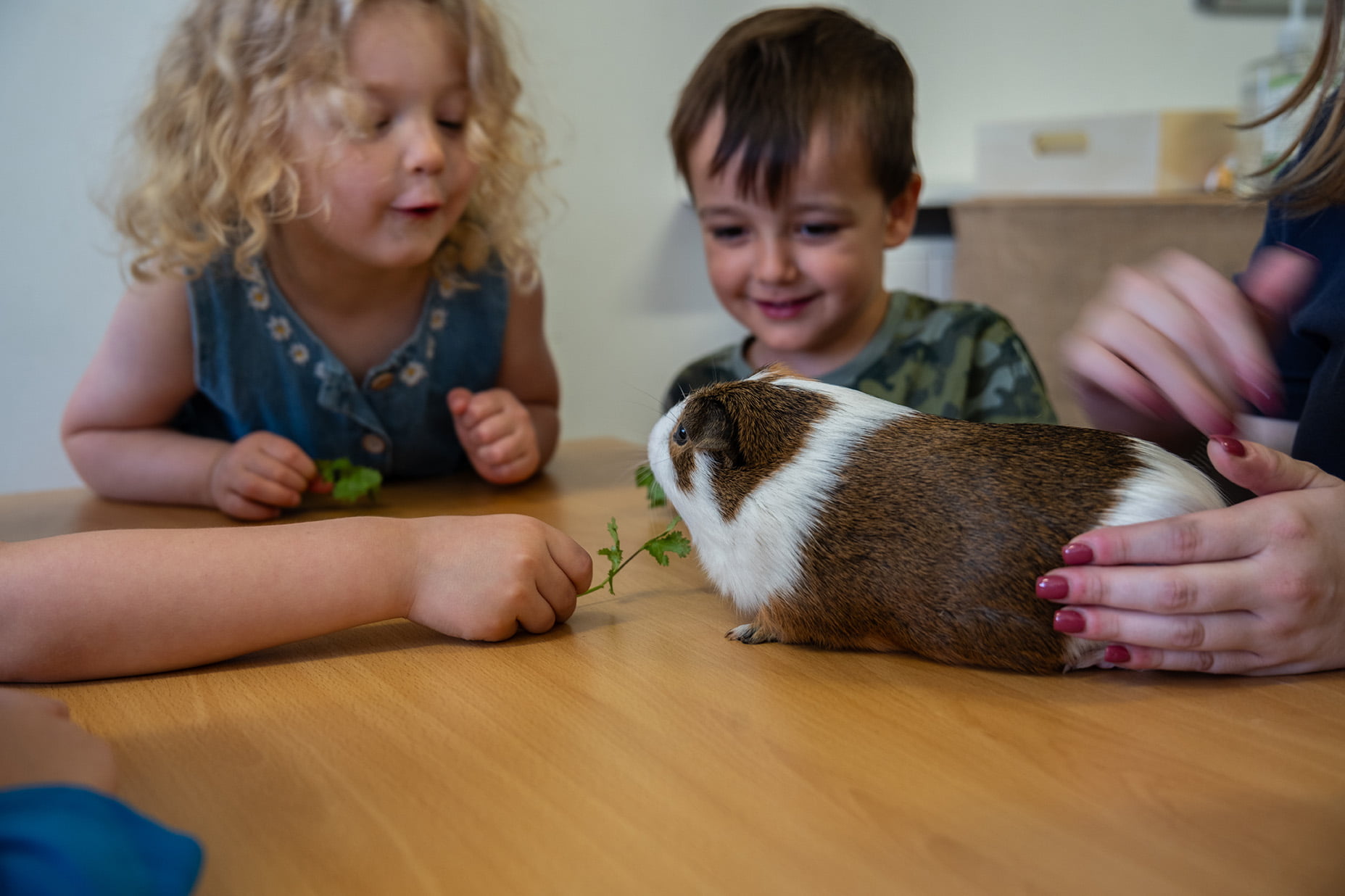
By interacting with our nursery pets, the children are directly exposed to personal, social and emotional areas of learning, where they can begin to understand skills such as caring and compassion. The children assist in taking care of the pets, such as helping to clean their cages and prepare their food, which helps to develop fine motor skills. We also use them to help the children better understand the world, such as exploring the foods we gave them and the lifecycle of animals.
We’re eager to introduce many different types of animals to the children’s learning. In the past, we have observed ducklings and chicks hatch, tadpoles develop into frogs, and caterpillars become beautiful butterflies.
Topic programme for 2025
- Core books
- Notable days
- Parent partnership events
January: Eco, recycling and environment
- A Planet Full of Plastic
- The Odd Fish
- World Snow Day
- National Fun at Work Day
- Lunar New Year
- Croissant Day
February: Seasons
- Stick Man
- A Stroll Through the Seasons
- Valentine's Day
- World Religion Day
- Popcorn Day
- Black History Month
- Dental Health Month
- Pancake morning
March: Nursery rhymes and fairytales
- Once Upon a Fairytale
- Moother Goose's Nursery Rhymes
- St David's Day
- Shrove Tuesday
- World Book Day
- Mother's Day
- Comic Relief
- St. Patrick's Day
- Easter
- Mother's Day breakfast
April: All around the world
- A Ticket Around the World
- The Snail and the Whale
- St George's Day
- World Health Day
- Pet Day
- International Children's Book Day
- Easter egg hunt
May: Animals and their life-cycles
- The Very Hungry Caterpillar
- One Little Frog
- National Play Outside Day
- Stay and play
June: Space
- Ten Little Aliens
- Meet the Planets
- National Cheese Day
- Father's Day
- Eid
- Father's Day breakfast
- Sport's day
July: People who help us
- Real Superheroes
- People Need Help
- World Chocolate Day
- World Forgiveness Day
- American Independence Day
- Nursery graduation
- Learning about parents' jobs
- Teddy bear's picnic
August: Transport
- Things That Go
- We Catch the Bus
- Watermelon Day
- International Dog Day
- International Cat Day
- Book Lovers Day
- Pool and foam party
September: All about me and my family
- The Same but Different
- Super Duper You
- Grandparent's Day
- Harvest Festival
- Emergency Services Day
- International Day of Sign Languages
- Stay and play
October: Dinosaurs
- The Dinosaur Who Lost His Roar
- Ten Little Dinosaurs
- Halloween
- International Music Day
- Halloween party
November: Sensory
- See, Touch, Feel
- When Things Get Too Loud
- Diwali
- St. Andrew's Day
- Rememberance Day
- Children in Need
- Movie nights
December: Christmas
- The Christmas Story
- What the Ladybird Heard at Christmas
- Christmas children's meal
- Christmas Jumper Day
- Christmas celebration